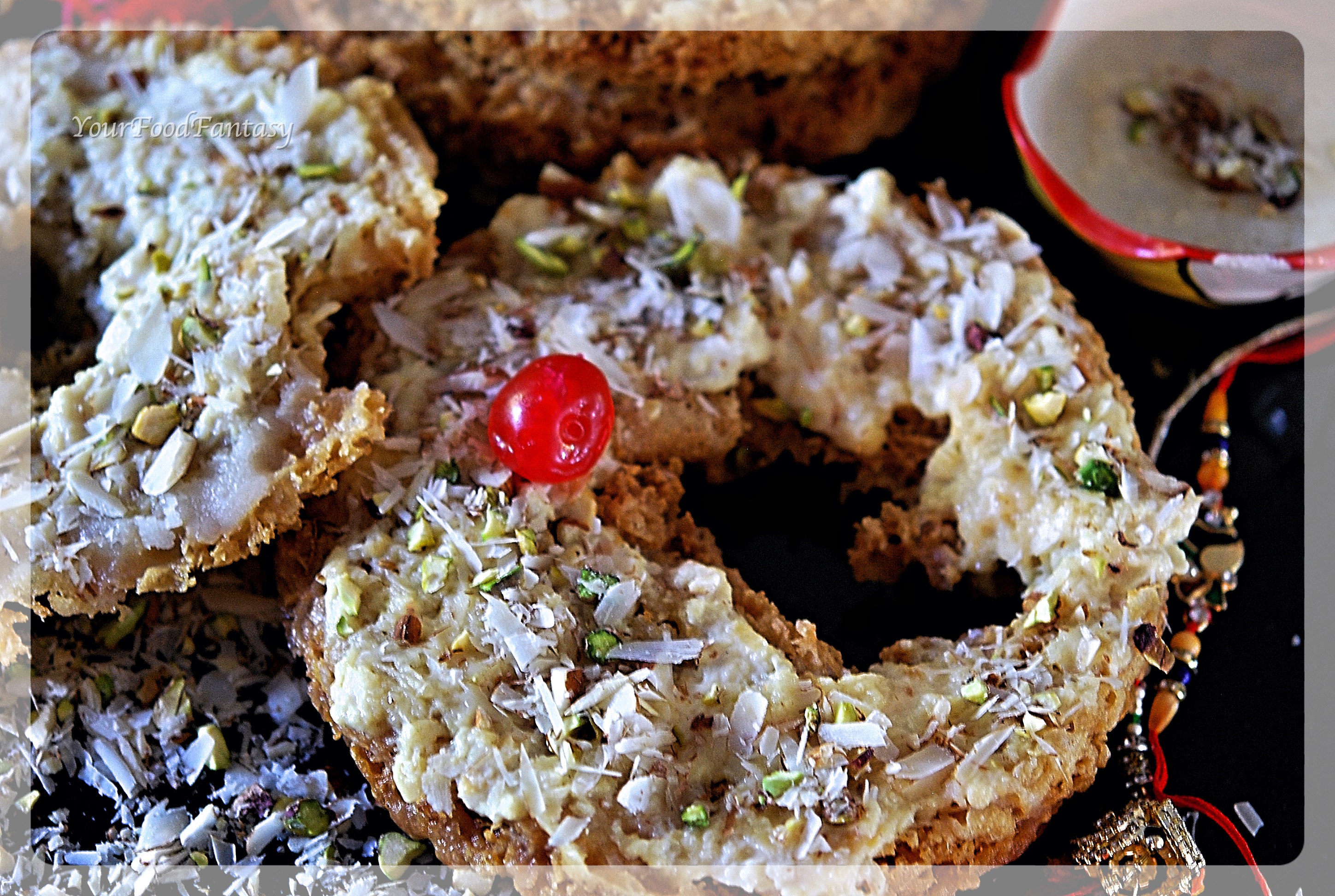
Ghevar (घेवर) or honey comb dessert is an Indian delicacy from the Rajasthani cuisine. It’s typically made on festivals during the monsoon season. These festivals include Teej and Rakhsha Bandhan. Ghevar is way different from other usual Indian sweets. It has a unique taste. Continue reading to find details of ghevar (also called malai ghevar) and ghevar recipe.
Jump to
What is Ghevar
Ghevar is no ordinary dessert—it’s a 10-inch plate of pure joy! This crispy, honeycomb-like delight is made from ghee, flour, and sugar syrup. It is a must-have during monsoon festivals like Rakhi and Teej. You can savor Plain Ghevar. Alternatively, indulge in the rich goodness of Mawa or Rabri Ghevar. This treat is as festive as it gets!
In India, Ghevar makes a grand appearance in sweet shops across Rajasthan, Uttar Pradesh, and Delhi during the monsoon months. If you’re living abroad, like me in the UK, finding authentic Ghevar is difficult. It’s harder than keeping white clothes clean during Holi.
Ever wondered why Ghevar is a monsoon staple? There’s actually a scientific (and tasty) reason behind it. According to Ayurveda, the humid months of July and August can trigger dryness, acidity, and, let’s face it, mood swings. Our ancestors, in their infinite wisdom, created this ghee-rich, sugar-loaded dessert to counteract those effects. The result? A happy body and a calm mind—served on a plate.
I craved Ghevar for years. I couldn’t find it in UK sweet shops, so I decided to take matters into my own hands. Back in 2016, I rolled up my sleeves and made it at home for the first time. Since then, it’s become an annual tradition, proving that where there’s a whisk, there’s a way!
So, if you’re missing this iconic monsoon dessert, why not try making Ghevar yourself? It’s not just a recipe—it’s a sweet connection to India’s rich heritage, wherever you are.

Ingredients
1. Clarified Butter (Desi Ghee):
Ghee is the soul of Ghevar, lending it a rich, aromatic flavor. It also helps create the batter’s creamy consistency and ensures even frying, giving Ghevar its signature texture.
2. All-Purpose Flour (Maida):
Maida forms the base of the batter, providing structure to the Ghevar. Its fine texture ensures a smooth, lump-free batter for a crispy and light outcome.
3. Ice Cubes:
Ice cubes are used to cream the ghee. This step cools down the ghee, helping achieve the perfect consistency and aeration for a flawless batter.
4. Milk:
Milk adds richness to the batter while also preventing the ghee from separating. It ensures the batter binds well for better frying results.
5. Water:
Water thins the batter to a runny consistency, which is essential for creating the delicate honeycomb texture unique to Ghevar.
6. Lemon Juice:
Lemon juice works as a binding agent for the batter while frying. It also enhances the batter’s elasticity, ensuring the Ghevar holds its shape.
7. Sugar:
Sugar is used to make the syrup that soaks into the Ghevar, giving it the perfect sweetness.
8. Milk (for Rabri):
Rabri adds indulgence to Ghevar. Reduced milk thickened with sugar and flavored with cardamom elevates the dessert’s richness.
9. Cardamom Powder:
Cardamom infuses a warm, aromatic flavor into the rabri, complementing the Ghevar’s sweetness.
10. Chopped Nuts:
Nuts like almonds and pistachios add a crunchy texture and visual appeal, making Ghevar a festive showstopper.
These thoughtfully chosen ingredients come together to create a dessert that’s as flavorful as it is iconic. Ready to try your hand at this royal treat?
Method of making ghevar
There are four steps
Getting basic / Raw part ready
- Take a big bowl and put Clarified Butter/Desi Ghee in it. Add the ice cubes and start whisking them together until the ghee turns to a cream like consistency. Now remove the ice cubes and whisk the butter until its smooth.
- Add all-purpose flour and milk to it in small amounts. Keep whisking them regularly to prevent lumps from forming.
- Once all the milk and flour is mixed, start adding water slowly with regular whisking again. Make a smooth running consistency batter by using water as required. Add lemon juice and whisk it properly again. Lemon juice helps in binding the flour mix while frying.
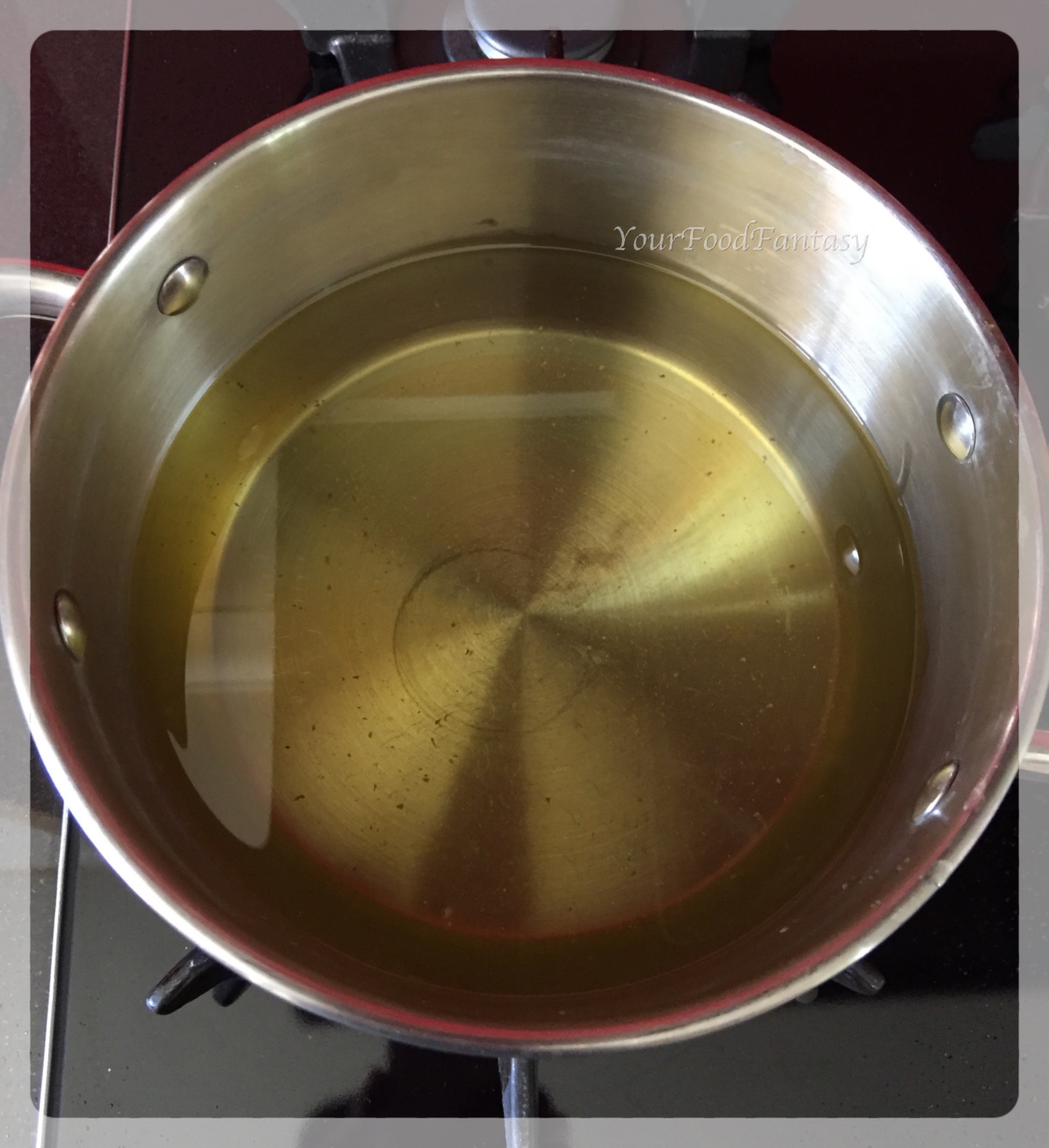
- Take a round deep and flat bottomed Pan / Kadhai and fill more than half of it with ghee. Heat it on high flame till the ghee gets really hot.
- Once the ghee is hot, take a ladle full of batter. Pour it in the middle of the pan in a thin stream. After pouring ladle full batter, wait for at least one minute till the bubbles settle. Then pour the second batch and continue this process. Ensure there is a hole in the centre. Push the batter towards the outer side, like forming a circle in the middle.
- Pour little batter on the sides of pan too to make it perfect round. Once you have poured enough batter, let it fry for few good minutes till its golden brown in colour. Try to rotate your ghee in the pan / kadhai while frying which helps in evenly frying of the ghevar.
- Once it’s fried properly, carefully insert that thin skewer or stick in the middle hole. Lift the whole ghevar with it.
- Keep the ghevar slightly tilted on a plate to remove excess oil.
Making sugar syrup
- To make sugar syrup, add sugar and water in a pan and let them boil. Add milk to remove the impurities, once it starts boiling. The scum will start collecting on the sides . Remove it and let your syrup boil till it reaches to 1.5 string consistency. Switch off the heat and let it cool for sometime.
Making Rabdi
- To make Rabri, take the milk in a heavy bottomed pan. Boil it until it reduces to 1/3rd of its original quantity. Keep stirring in between so as the milk don’t stick to the bottom. Add sugar and Cardamom powder and mix well.
Assembling ghevar
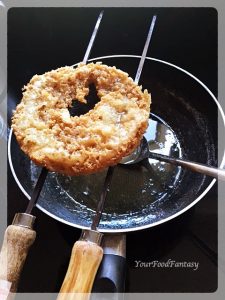
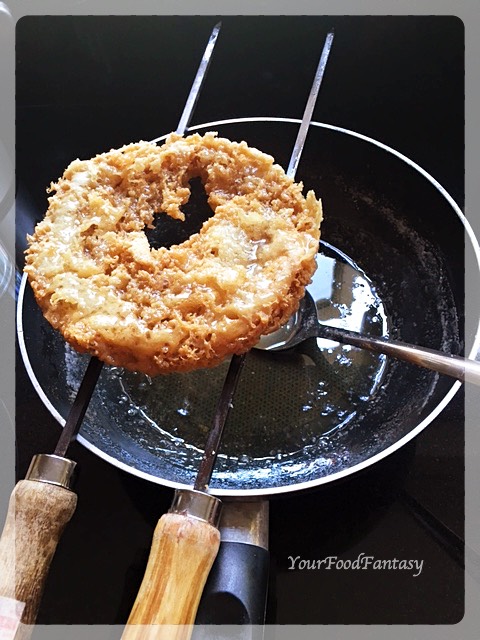
- Put 2 skewers on the sugar syrup pan and place your one round of ghevar on it. Start Pouring Sugar syrup on ghevar. Pour the syrup everywhere on the ghevar.
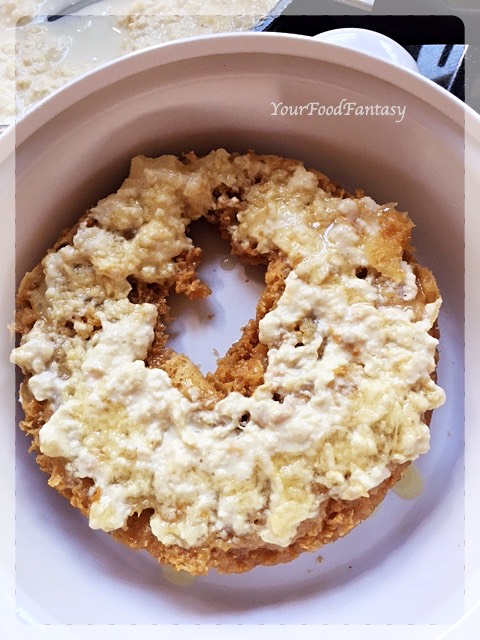
- Top it up with rabri and carefully place it on to a plate so that excess syrup is released.
- Garnish them with chopped nuts

Pro tips
Making Ghevar isn’t just cooking; it’s an art. But don’t worry—follow these tips, and you’ll have perfectly golden, crispy Ghevars without the kitchen drama!
1. Choose Your Pan Wisely
A deep, thick-bottomed pan is a must. Why? Because Ghevar batter is like a rebellious teenager—it splatters everywhere! A shallow pan means ghee spills all over your stove, and nobody wants that kind of cleanup.
2. Ice-Cold is Key
When making the batter, use ice-cold water and milk. This little trick keeps the ghee from separating and ensures your batter stays smooth and cooperative.
3. Handle with Care
Ghevars are like the divas of Indian sweets—delicate and prone to cracking. Handle them gently, or you’ll end up with Ghevar crumbs instead of masterpieces.
4. Prep Like a Pro
Make your rabdi in advance. This saves time and lets you focus on frying those Ghevars to perfection.
5. Lemon Love
Add a squeeze of lemon juice to the batter. It helps bind the flour mix, ensuring your Ghevar holds its shape while frying.
6. Oil Temperature Check
Before diving in, test the oil. Drop a bit of batter in—if it rises immediately and doesn’t stick, you’re good to go. If it sinks, your oil needs a little more heat therapy.
7. Pour Like a Pro
As you pour batter into the center of the ghee, it’ll spread and puff up beautifully. Use a skewer to create space in the middle for pouring more batter. It’s like sculpting—but tastier!
Follow these steps, and you’ll have Ghevars that’ll impress even the toughest sweet critics. Fry away, and may the Ghevar gods be with you! 🫓🎉

Storage
You can store the Ghevar with sugar syrup for almost 2 weeks in an air tight container. If you are using Rabri, it is recommended to finish in 2-3 days. Rabri tends to perish in 3-4 days.
Serving suggestion for Ghevar
Traditional Style: Serve Ghevar warm. Add a generous drizzle of rabri. Sprinkle chopped nuts like almonds, pistachios, or cashews for an indulgent dessert.
Festive Platter: Pair it with other Indian sweets like rasmalai or gulab jamun during festivals.
Mini Desserts: Cut Ghevar into smaller portions and serve as bite-sized treats at parties.
Fusion Twist: Use Ghevar as a base for desserts. Add fresh fruits. Include whipped cream. Try a chocolate drizzle.
Gourmet Tea Pairing: Enjoy Ghevar alongside masala chai or saffron-infused tea for a rich, royal snack.
FAQs About Making and Serving Ghevar
1. Can I use oil instead of ghee to fry Ghevar?
Traditionally, Ghevar is fried in ghee for its rich aroma and flavor. While oil can be used, it won’t provide the same authentic taste.
2. How do I know if my sugar syrup is the right consistency?
The syrup is ready when it reaches a 1.5-string consistency. To test, take a drop between your fingers—if it forms a thin string that doesn’t break, it’s perfect.
3. What if my Ghevar breaks while lifting?
Ghevar is delicate! Use a skewer or a flat spatula and handle it gently to avoid cracks.
4. Can I make Ghevar in advance?
Yes, you can prepare Ghevar and store it without syrup or rabri in an airtight container for 2-3 days. Add toppings just before serving.
5. Can I skip the rabri?
Sure! Ghevar can be enjoyed with just sugar syrup and nuts if you prefer a lighter version.
6. Why does my batter not spread evenly?
Make sure the ghee is hot enough. Pour the batter in a thin, steady stream. This will help achieve a perfectly round shape.
With these tips, you’re ready to make and serve Ghevar like a pro!
Recipe Card
Ghevar Recipe – How to make Ghevar

Ingredients
For Ghevar
- 250 Grams All Purpose Flour/ Maida
- 50 Grams Ghee / Clarified Butter
- 1/4 Cup Milk
- 1/2 Litre Ghee or Oil For Deep Frying
- 4 Cup Ice Cold Water
- 10 Ice Cubes
- 1.5 Teaspoon Lemon Juice
- 4 Tablespoon Chopped Almonds and Pistachios
For Sugar Syrup
- 400 Grams Sugar
- 1 Cup Water
- 1 Tablespoon Milk
For Rabri
- 1 Litre Full Fat Milk
- 1.5 Tablespoon Sugar
- 1/3 Teaspoon Cardamom Powder
Instructions
Making Ghevar
- First of all, Sieve the All purpose flour / Maida and keep it aside.

- Now take a big bowl and put Clarified Butter/Desi Ghee in it. Add the ice cubes and start whisking them together until the ghee turns to a cream like consistency. Now remove the ice cubes and whisk the butter until its smooth. See Video below.
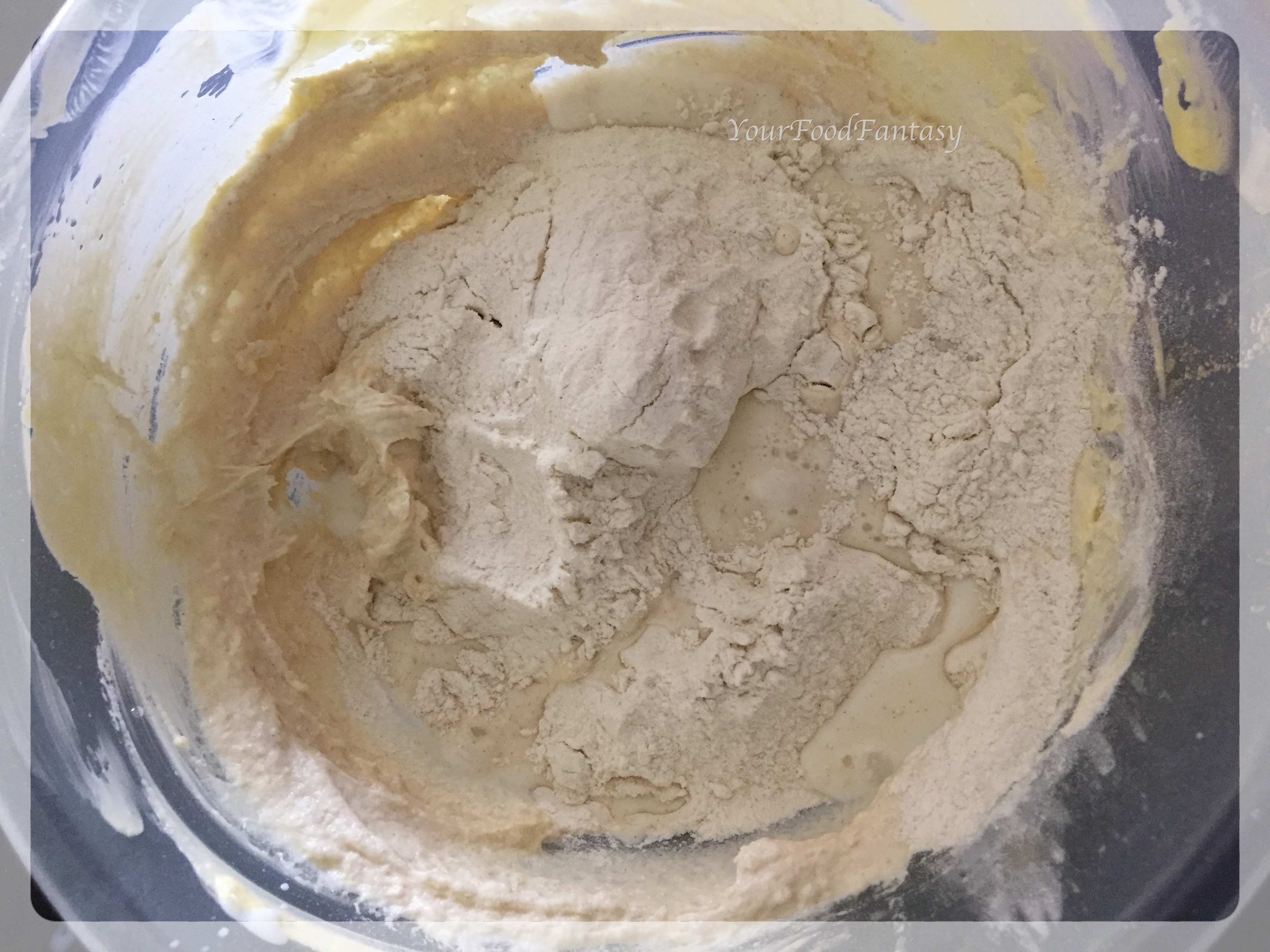
- Now start adding all purpose flour and milk to it in small amounts and whisking them regularly so that there is no lumps made.

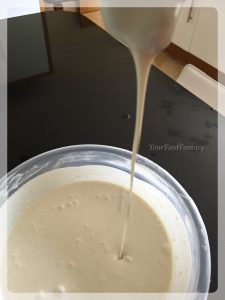
- Once all the milk and flour is mixed, start adding water slowly with regular whisking again. Make a smooth running consistency batter by using all of the remaining water. Now add lemon juice and whisk it properly again. Lemon juice helps in binding the flour mix while frying.
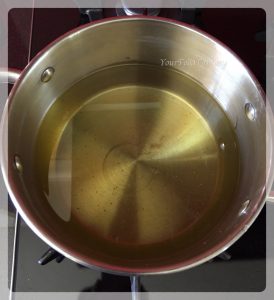
- Take a round deep and flat bottomed Pan / Kadhai and fill more than half of it with ghee. Heat it on high flame till the ghee gets really hot. You can check the correct temperature by dropping a small portion of the batter and see if it immediately comes up, and doesn't stick to the bottom.
- Once the ghee is hot, take ladle full of batter and pour it in the middle of the pan in a thin stream. After pouring ladle full batter, wait for at least one minute till the bubbles settles and then pour the second batch.
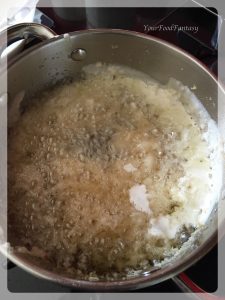
- Repeat the same process for 3-4 times depending on the size of ghevar, you want. When pouring the batter into the centre of pot, it spreads around the corner and lift up in the ghee. Keep making space in centre by using a skewer/round stick to pour more batter after the previous batch has settled.
- Pour little batter on the sides of pan too to make it perfect round. Once you have poured enough batter, let the ghevar fry for few good minutes till its golden brown in colour. Try to rotate your ghee in the pan / kadhai while frying which helps in evenly frying of the ghevar.
- Once its fried properly, take it out very carefully by inserting that thin skewer/stick in the middle hole and lifting the whole ghevar with it.

- Keep the ghevar slightly tilted on a plate to remove excess oil. I hanged it with the help of skewers and taking support of two tall glasses.




To Make Sugar Syrup
- Now to make sugar syrup, add sugar and water in a pan and let them boil. Add milk to remove the impurities, once it starts boiling. The scum will start collecting on the sides . Remove it and let your syrup boil till it reaches to 1.5 string consistency. Switch off the heat and let it cool for sometime.


To Make Rabdi / Rabri
- Start making Rabri, by taking the milk in a heavy bottommed pan and boiling it till it reduces to 1/3rd of its original quantity. Keep stirring in between so as the milk don’t stick to the bottom. Add sugar and Cardamom powder and mix well.


Assembly of Ghevar
- Now put 2 skewers on the sugar syrup pan and place your one round of ghevar on it. Start Pouring Sugar syrup on ghevar. pour the syrup everywhere in the middle and on the sides too.
- Now top it up with rabri and carefully place it on to a plate so that excess syrup is released.

- Garnish them with chopped nuts and enjoy eating.

Notes
- You can prepare Rabri first and then start preparing your Ghevar and sugar syrup.
- Make sure you use a deep and thick bottom pan to fry Ghevar. When Ghevar batter is poured in the ghee it splatters, so if you use shallow vessel then ghee will spill out of the vessel.
- Always use ice cold water and cold milk to make batter as it prevents the ghee separating from the batter when whisked continuously.
- Always handle the fried Ghevar very carefully as they are really delicate and can crack very easily if not handled properly.
- You can store the Ghevar with sugar syrup for almost 2 weeks in an air tight container, but if you using Rabri then its recommended to finish in 2-3 days as rabri tends to perish in 3-4 days.
Wow!
Thank you